

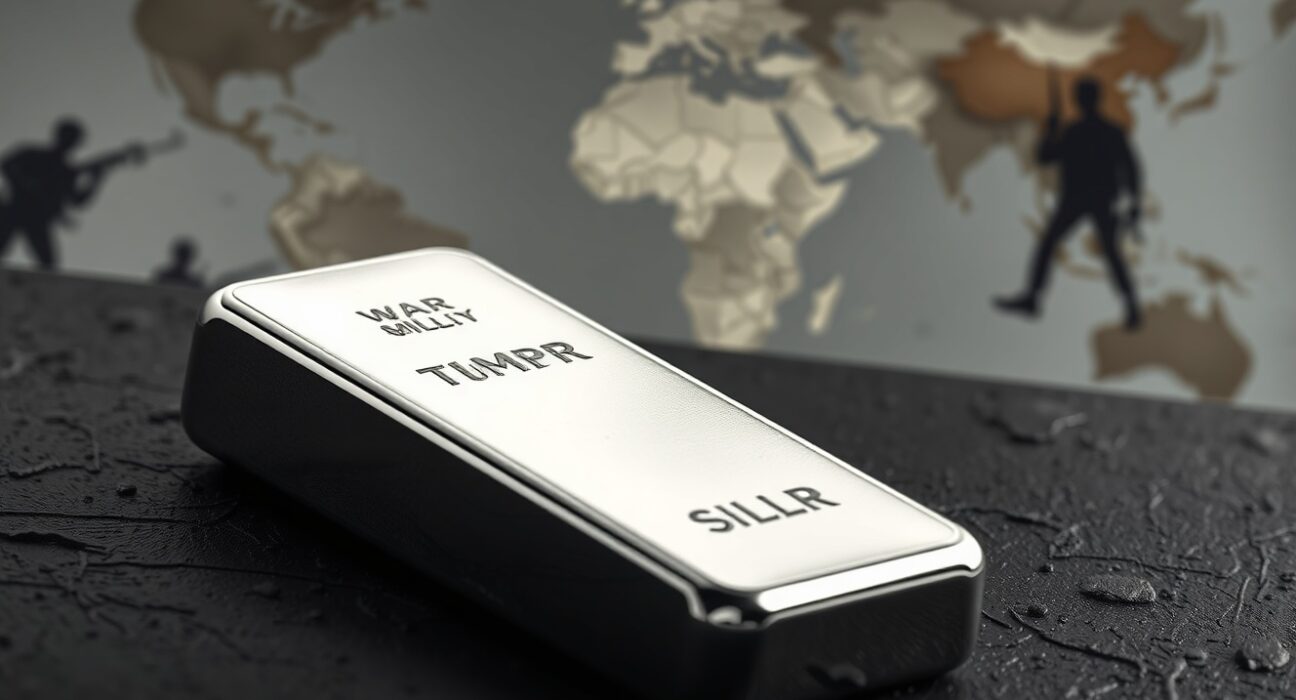
Silver has historically been considered a safe-haven asset, a store of value that investors flock to during times of geopolitical turmoil. Yet, in the current cycle of escalating conflicts and global instability, silver prices have not responded with the expected rally. This ‘missing crisis trade’ is puzzling analysts and challenging long-held assumptions about the metal’s role in a diversified portfolio.
The Disconnect Between War and Silver Prices
Since the onset of major geopolitical crises in 2022, including the war in Ukraine and subsequent tensions in the Middle East, silver prices have largely moved sideways or declined, even as traditional safe havens like gold and the U.S. dollar have strengthened. As of mid-2025, silver is trading around $24 per ounce, significantly below its 2020 highs near $30. This stands in stark contrast to gold, which has repeatedly tested all-time highs above $2,400 per ounce during the same period.
The divergence is not merely a matter of price. It reflects a fundamental shift in how different asset classes are perceived during periods of risk. While gold benefits from central bank buying and a deeply entrenched status as the ultimate monetary metal, silver is increasingly being viewed through an industrial lens. Approximately 50% of annual silver demand comes from industrial applications, including solar panels, electronics, and automotive components. When geopolitical uncertainty threatens global economic growth, industrial demand for silver weakens, putting downward pressure on prices.
Why Silver Is Behaving Differently This Cycle
The ‘crisis trade’ for silver has historically been driven by a combination of safe-haven buying and monetary inflation expectations. In the current environment, several factors are muting this traditional response.
Industrial demand overhang. The global economic slowdown, exacerbated by trade tensions and supply chain disruptions, has dampened demand for silver in key industrial sectors. The transition to renewable energy, while a long-term positive for silver (used extensively in photovoltaic cells), has not yet created the sustained demand surge that bulls had anticipated.
Strong U.S. dollar and higher interest rates. The Federal Reserve’s aggressive interest rate hikes have strengthened the U.S. dollar, making dollar-denominated assets more attractive and pressuring precious metals prices. Silver, which is priced in dollars, becomes more expensive for foreign buyers when the dollar rises, reducing demand.
Lack of central bank buying. Unlike gold, which has seen massive central bank purchases as countries diversify away from the dollar, silver does not enjoy the same institutional support. Central banks do not hold significant silver reserves, removing a key source of price support during crises.
What This Means for Investors
For investors, the missing crisis trade in silver suggests that the metal can no longer be relied upon as a pure safe-haven asset. Its price is increasingly tied to industrial fundamentals and macroeconomic conditions, not just geopolitical fear. This does not mean silver lacks value, but it requires a more nuanced investment thesis.
Silver may still offer opportunities during periods of economic expansion, when industrial demand is strong, or during episodes of severe monetary debasement. However, for pure crisis hedging, gold and U.S. Treasuries have proven more reliable in the current cycle. Investors holding silver should be prepared for continued volatility and a potential lag in performance relative to other safe-haven assets.
Conclusion
The failure of silver to rally during the latest wave of geopolitical crises is a significant market development. It underscores the metal’s evolving identity from a purely monetary asset to a dual-purpose commodity with heavy industrial exposure. While silver remains a valuable component of a diversified portfolio, its behavior during wartime no longer follows the traditional script. Investors should adjust their expectations and recognize that silver’s ‘crisis trade’ may be a thing of the past.
FAQs
Q1: Why is silver not rising during geopolitical crises like it used to?
A1: Silver’s price is now heavily influenced by industrial demand, which weakens during economic slowdowns triggered by crises. Unlike gold, it lacks central bank buying support and is pressured by a strong U.S. dollar and higher interest rates.
Q2: Is silver still a good safe-haven investment?
A2: Silver’s safe-haven properties have diminished in the current cycle. For pure crisis hedging, gold and U.S. Treasuries have proven more effective. Silver may still perform well during periods of economic expansion or severe inflation.
Q3: What factors could trigger a silver rally in the future?
A3: A sustained recovery in global industrial production, a weakening U.S. dollar, a pivot to lower interest rates by central banks, or a significant acceleration in solar energy adoption could all provide catalysts for a silver price rally.
Disclaimer: The information provided is not trading advice, Bitcoinworld.co.in holds no liability for any investments made based on the information provided on this page. We strongly recommend independent research and/or consultation with a qualified professional before making any investment decisions.
