

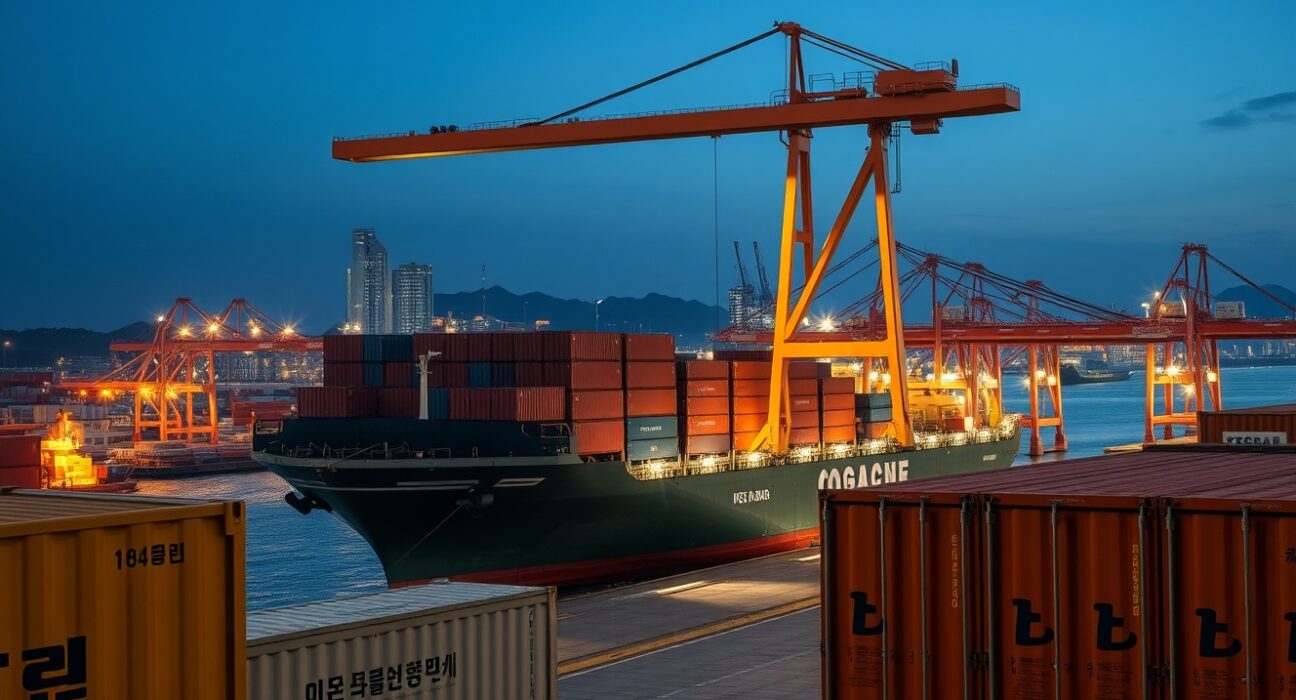
SEOUL, South Korea – March 2025: South Korea’s economy presents a striking paradox as export figures reach unprecedented heights while domestic equities continue to underperform, according to recent analysis from BNY Mellon Investment Management. This divergence between trade success and market valuation captures the complex dynamics shaping Asia’s fourth-largest economy in the mid-2020s.
South Korea’s Export Engine Powers Ahead
The nation’s export sector demonstrates remarkable resilience and growth throughout early 2025. South Korean exports surged by 18.7% year-over-year in February, marking the fifth consecutive month of double-digit expansion. Semiconductor shipments, representing the cornerstone of Korean exports, increased by 56.2% during the same period. Automotive exports followed with a robust 24.8% gain, while petrochemical products showed a 15.3% increase.
Several structural factors drive this export momentum. Firstly, global demand for advanced semiconductors continues to accelerate amid artificial intelligence adoption and 5G infrastructure expansion. Secondly, South Korean manufacturers maintain competitive advantages in electric vehicle batteries and renewable energy technologies. Thirdly, trade diversification efforts have reduced dependency on any single market, with exports to ASEAN nations growing by 22.1% and shipments to India increasing by 31.4%.
Key Export Performance Indicators
The following table illustrates South Korea’s export composition and growth patterns:
| Export Category | February 2025 Growth | Market Share |
|---|---|---|
| Semiconductors | +56.2% | 18.7% |
| Automobiles | +24.8% | 12.4% |
| Petrochemicals | +15.3% | 8.9% |
| Displays | +11.2% | 5.6% |
| Steel Products | +8.7% | 4.3% |
The Persistent Equities Market Underperformance
Despite these strong export fundamentals, South Korean equities tell a different story. The benchmark KOSPI index has gained only 3.2% year-to-date, significantly trailing regional peers. Japan’s Nikkei 225 has advanced 12.8% during the same period, while Taiwan’s TAIEX has risen 9.4%. This performance gap highlights structural challenges within South Korea’s domestic market environment.
BNY analysts identify multiple factors contributing to this equities lag. Foreign investors have been net sellers of Korean stocks for seven consecutive months, withdrawing approximately $4.2 billion since August 2024. Additionally, retail investor participation has declined by 18% compared to 2024 levels. Market volatility remains elevated, with the KOSPI experiencing 12% more daily price swings than its five-year average.
Several specific concerns weigh on investor sentiment:
- Corporate governance issues continue to affect valuation multiples
- Currency volatility creates hedging challenges for international investors
- Geopolitical tensions in the region introduce uncertainty premiums
- Regulatory changes affecting key industries create policy uncertainty
Structural Divergence Between Trade and Finance
The disconnect between export performance and equity market returns reveals deeper economic structural issues. South Korea’s export success increasingly depends on a narrow range of technology-intensive products, creating concentration risks. Meanwhile, domestic consumption growth remains subdued at 2.1% annually, limiting broader economic momentum.
Financial market development has not kept pace with industrial advancement. South Korea’s capital markets exhibit several distinctive characteristics. The dominance of family-controlled conglomerates, known as chaebols, continues to influence corporate decision-making and shareholder returns. Additionally, relatively low dividend yields averaging 1.8% compared to regional averages of 2.7% reduce income appeal for long-term investors.
Expert Perspectives on Market Dynamics
Financial analysts offer nuanced interpretations of this economic paradox. According to BNY’s Asia-Pacific research team, “South Korea represents a classic case of strong fundamentals meeting weak sentiment. The export data clearly supports economic resilience, but equity markets respond to different signals including governance, liquidity, and risk perceptions.”
Market strategists note that valuation metrics tell a compelling story. South Korean stocks trade at approximately 9.2 times forward earnings, representing a 28% discount to their 10-year average. This valuation gap persists despite improving corporate profitability, with listed companies expected to deliver 14% earnings growth in 2025.
Policy Responses and Market Implications
South Korean authorities have implemented several measures to address this divergence. The Financial Services Commission announced enhanced corporate governance guidelines in January 2025, aiming to improve shareholder rights and transparency. Additionally, the government has proposed tax incentives for long-term equity investments and expanded foreign investor access to domestic markets.
Monetary policy remains accommodative, with the Bank of Korea maintaining its benchmark interest rate at 3.25% despite global tightening trends. This supportive stance aims to stimulate domestic investment while managing currency stability concerns. Fiscal measures include increased research and development tax credits for strategic industries and infrastructure investments in digital transformation.
The international investment community watches these developments closely. Global fund managers report increasing interest in Korean equities as a value opportunity, though implementation remains cautious. According to recent surveys, 42% of international investors identify South Korea as undervalued relative to fundamentals, yet only 28% have increased allocations due to structural concerns.
Regional Context and Comparative Analysis
South Korea’s experience reflects broader regional patterns with important distinctions. Like Japan in the late 2010s, strong export performance coexists with domestic market challenges. However, South Korea faces unique demographic pressures with one of the world’s lowest fertility rates and rapid population aging. These factors influence long-term growth projections and market valuations.
Comparative analysis with regional peers reveals instructive patterns. Taiwan’s semiconductor-driven export growth has translated more effectively into equity market gains due to different corporate structures and investor relations practices. Singapore’s financial market development offers alternative models for capital market deepening and international integration.
Future Outlook and Strategic Considerations
The trajectory of South Korea’s economy and markets depends on several evolving factors. Technological leadership in semiconductors and batteries provides competitive advantages, but requires continuous innovation investment. Demographic challenges necessitate productivity enhancements and workforce adaptation. Geopolitical developments in Northeast Asia create both risks and opportunities for trade and investment flows.
Market participants anticipate potential convergence between export strength and equity performance. Improving corporate governance practices could enhance valuation multiples over time. Increased foreign investment following index inclusion changes may improve market liquidity and depth. Technological innovation in financial services, including digital asset integration, could modernize market infrastructure.
Conclusion
South Korea’s economic landscape in 2025 presents a complex picture of export strength alongside equity market challenges. The nation’s export surge demonstrates industrial competitiveness and global integration, particularly in technology-intensive sectors. However, persistent equities lag reflects structural issues in corporate governance, investor sentiment, and market development. This divergence between trade performance and financial market returns represents both a challenge and opportunity for policymakers, corporations, and investors. The resolution of this paradox will significantly influence South Korea’s economic trajectory and its position in global financial markets.
FAQs
Q1: What are the main drivers behind South Korea’s export growth in 2025?
South Korea’s export expansion primarily stems from strong global demand for semiconductors, particularly for AI and 5G applications, along with growing electric vehicle battery exports and successful trade diversification to emerging markets.
Q2: Why are South Korean equities underperforming despite strong exports?
Equity market lag results from multiple factors including foreign investor outflows, corporate governance concerns, currency volatility, geopolitical uncertainties, and relatively low dividend yields compared to regional peers.
Q3: How does South Korea’s export concentration affect economic stability?
Heavy reliance on semiconductor exports creates concentration risk, though diversification efforts into batteries, renewable energy, and biotechnology are gradually reducing this dependency and enhancing economic resilience.
Q4: What policy measures is South Korea implementing to address market challenges?
Authorities have introduced enhanced corporate governance guidelines, tax incentives for long-term investment, expanded foreign investor access, maintained accommodative monetary policy, and increased R&D support for strategic industries.
Q5: How do South Korea’s market challenges compare to regional peers?
South Korea faces similar export-equity divergences as Japan historically experienced, but with unique demographic pressures and corporate structures that require tailored solutions rather than direct regional comparisons.
Disclaimer: The information provided is not trading advice, Bitcoinworld.co.in holds no liability for any investments made based on the information provided on this page. We strongly recommend independent research and/or consultation with a qualified professional before making any investment decisions.
