

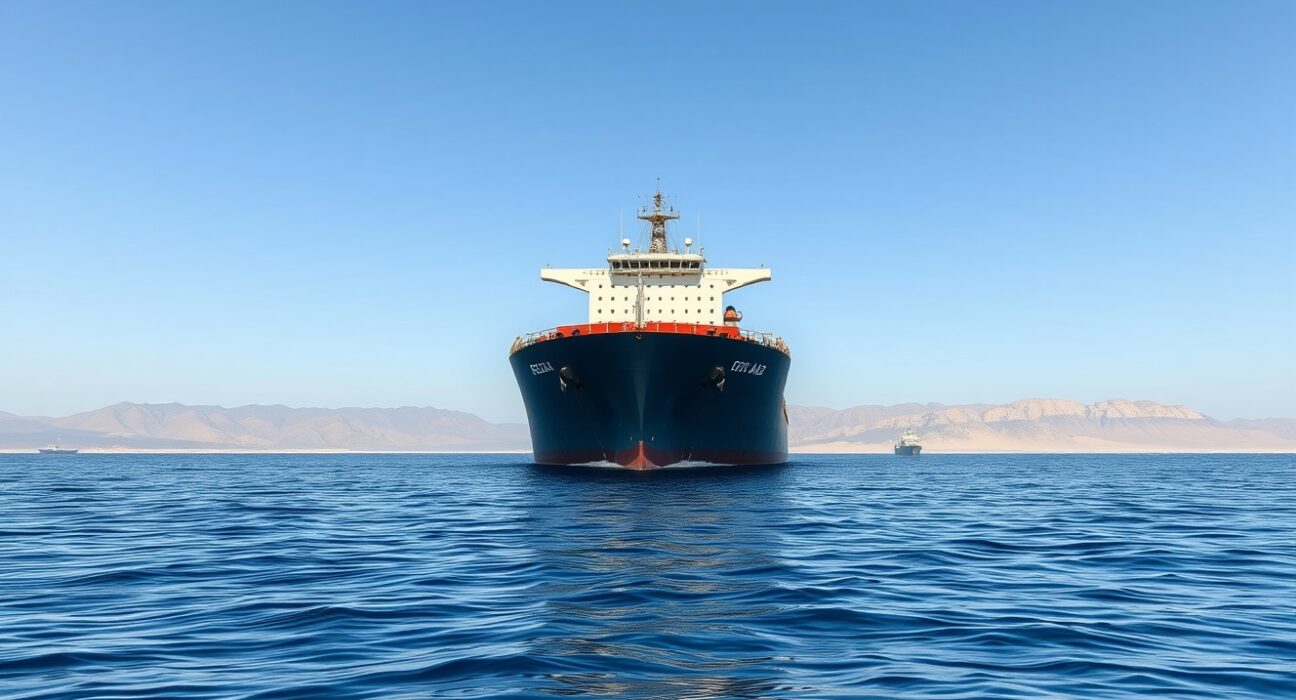
TEHRAN, Iran – April 15, 2025 – In a significant escalation of regional tensions, Iranian forces have seized a commercial oil tanker transiting the strategic Strait of Hormuz. The Islamic Revolutionary Guard Corps (IRGC) Navy conducted the operation, citing an alleged violation of a ceasefire agreement by Israel as the justification. This incident immediately raises profound concerns about maritime security and the stability of global energy supplies. Consequently, analysts are closely monitoring the potential for a wider regional confrontation.
Iran Seizes Oil Tanker: The Immediate Incident
According to Iran’s semi-official Fars News Agency, the seizure occurred in the early hours of Tuesday. The IRGC naval units intercepted the Marshall Islands-flagged tanker MT Argonaut as it navigated international waters. Iranian authorities stated the vessel was diverted to an Iranian port for further investigation. Furthermore, they claimed the action was a direct response to what they termed “blatant Israeli aggression” that breached an unspecified, fragile ceasefire. The tanker was reportedly carrying approximately one million barrels of crude oil from Kuwait to a European destination.
International maritime tracking data confirmed the MT Argonaut abruptly altered its course and stopped transmitting its Automatic Identification System (AIS) signal near Qeshm Island. The United Kingdom Maritime Trade Operations (UKMTO) agency subsequently issued a warning to ships in the area. Meanwhile, the U.S. Navy’s Fifth Fleet, based in Bahrain, stated it was “monitoring the situation closely.” This event marks the first major seizure of a commercial vessel in the strait in over a year.
Anatomy of a Strategic Chokepoint
The Strait of Hormuz is arguably the world’s most critical maritime oil transit corridor. Consequently, any disruption there sends immediate shockwaves through global markets.
- Volume: An estimated 20-21 million barrels of oil pass through daily.
- Global Share: This represents about 21% of global petroleum liquid consumption.
- Key Exporters: Saudi Arabia, Iraq, the UAE, Kuwait, and Iran itself rely on the route.
- Geography: The narrow waterway is only 21 miles wide at its narrowest point.
Context of Israeli-Iranian Tensions and Ceasefire Claims
The Iranian claim of an Israeli ceasefire violation references a complex, shadow conflict. For years, Israel and Iran have engaged in a protracted struggle across the Middle East. This conflict often involves proxy forces and covert operations. Recently, a period of reduced direct hostilities, facilitated by indirect talks, had been reported. However, Iran’s assertion suggests a specific, undisclosed Israeli action—potentially an airstrike in Syria or a cyber operation—that Tehran claims nullified this tacit understanding.
Experts note that using maritime seizure as a retaliatory tool is a calculated Iranian strategy. “Iran has a history of leveraging its geographic control over the Strait of Hormuz to project power and respond to perceived provocations,” explains Dr. Anahita Sharma, a senior fellow at the Gulf Maritime Security Institute. “This action serves multiple purposes: it demonstrates capability, creates an international crisis to gain bargaining leverage, and directly threatens the economic interests of Israel’s allies.”
Immediate Impacts on Global Oil Markets and Shipping
The seizure triggered an immediate and sharp reaction in financial markets. Global benchmark Brent crude futures surged by over 4% in early trading. Similarly, shipping insurance premiums for vessels transiting the Persian Gulf, known as war risk premiums, are expected to spike dramatically. Major shipping companies like Maersk and BP have begun reviewing their security protocols for the region. Additionally, some tankers may choose to reroute, adding significant time and cost to voyages.
| Year | Incident | Market Impact |
|---|---|---|
| 2019 | Tanker attacks & UK-flagged tanker seizure | Brent rose ~15% over two weeks |
| 2021 | Israeli-linked vessel attacked | Limited price spike, high insurance costs |
| 2023 | IRGC harassment of commercial ships | Increased naval patrols by US & allies |
| 2025 | Seizure of MT Argonaut (Current) | Immediate 4% price jump, ongoing volatility |
Legal and Diplomatic Ramifications of the Seizure
From a legal standpoint, the seizure in international waters presents serious questions. The Marshall Islands flag state has condemned the action as “a clear violation of international maritime law.” Under the United Nations Convention on the Law of the Sea (UNCLOS), states have limited rights to interfere with vessels exercising innocent passage. Iran’s justification, linking the seizure to a land-based political dispute with Israel, finds little precedent in international law. Therefore, the incident will likely be raised at the UN Security Council and the International Maritime Organization (IMO).
Diplomatically, Western powers have called for the vessel’s immediate release. The European Union, a major destination for Gulf oil, expressed “grave concern.” Simultaneously, regional actors like Saudi Arabia and the UAE have remained cautiously quiet, likely engaging in behind-the-scenes diplomacy to de-escalate the situation. The U.S. State Department has demanded “unconditional release” and is consulting with allies on a coordinated response.
Risk of Military Miscalculation
The presence of U.S., British, and other allied naval forces in the Gulf creates a high-risk environment. A confrontation between IRGC speedboats and Western warships, while not imminent, remains a persistent danger. Military analysts stress that such incidents test established de-confliction channels and could spiral if communication fails. The priority for all naval actors now is to avoid any sudden maneuvers that could be misinterpreted as hostile.
Historical Precedents and Iran’s Maritime Strategy
This is not an isolated event. Iran has repeatedly used maritime coercion as a tool of statecraft. For instance, in 2019, Iran seized the British-flagged tanker Stena Impero in retaliation for the UK detaining an Iranian tanker off Gibraltar. That crisis lasted for months before a reciprocal release was negotiated. Furthermore, Iran has been accused of mining commercial shipping and using drone and missile attacks against vessels linked to its adversaries.
This pattern reveals a strategic doctrine. Iran understands its asymmetric advantage in the confined waters of the Gulf. Its large fleet of fast attack craft, naval mines, and anti-ship missiles allows it to pose a credible threat to shipping without engaging in a conventional naval battle it would likely lose. Each seizure or attack is calibrated to signal resolve, extract concessions, and remind the world of Tehran’s ability to disrupt the global economy.
Conclusion
The seizure of the MT Argonaut oil tanker by Iran in the Strait of Hormuz represents a dangerous inflection point. It directly links the volatile Israeli-Iranian shadow war to the security of global energy transit corridors. While the immediate focus is on the safe release of the vessel and its crew, the underlying tensions remain unresolved. This incident underscores the fragile nature of security in the Persian Gulf and the persistent risk that regional conflicts pose to international trade and economic stability. The world will now watch closely to see if diplomacy can lower the temperature or if this seizure heralds a new, more confrontational phase in one of the world’s most strategically vital waterways.
FAQs
Q1: What was the name of the tanker seized by Iran?
A1: The vessel is the Marshall Islands-flagged oil tanker MT Argonaut. It was carrying approximately one million barrels of crude oil when intercepted.
Q2: Why is the Strait of Hormuz so important?
A2: The Strait of Hormuz is a critical maritime chokepoint through which about 21% of global petroleum liquids pass daily, making it essential for the world’s energy supply and pricing.
Q3: What legal justification did Iran provide for the seizure?
A3: Iran’s Revolutionary Guard Corps cited an alleged violation of a ceasefire agreement by Israel as the reason, claiming the seizure was a retaliatory measure. This justification is widely contested under international maritime law.
Q4: How have oil markets reacted to the incident?
A4: Global oil prices, specifically Brent crude futures, surged by over 4% following the news. Shipping insurance costs for the region are also expected to rise significantly.
Q5: What is the likely international response?
A5: The response will likely involve diplomatic pressure at the UN, possible sanctions discussions, and increased naval patrols by the U.S. and allies to reassure commercial shipping. The immediate goal is the tanker’s release.
Disclaimer: The information provided is not trading advice, Bitcoinworld.co.in holds no liability for any investments made based on the information provided on this page. We strongly recommend independent research and/or consultation with a qualified professional before making any investment decisions.
