

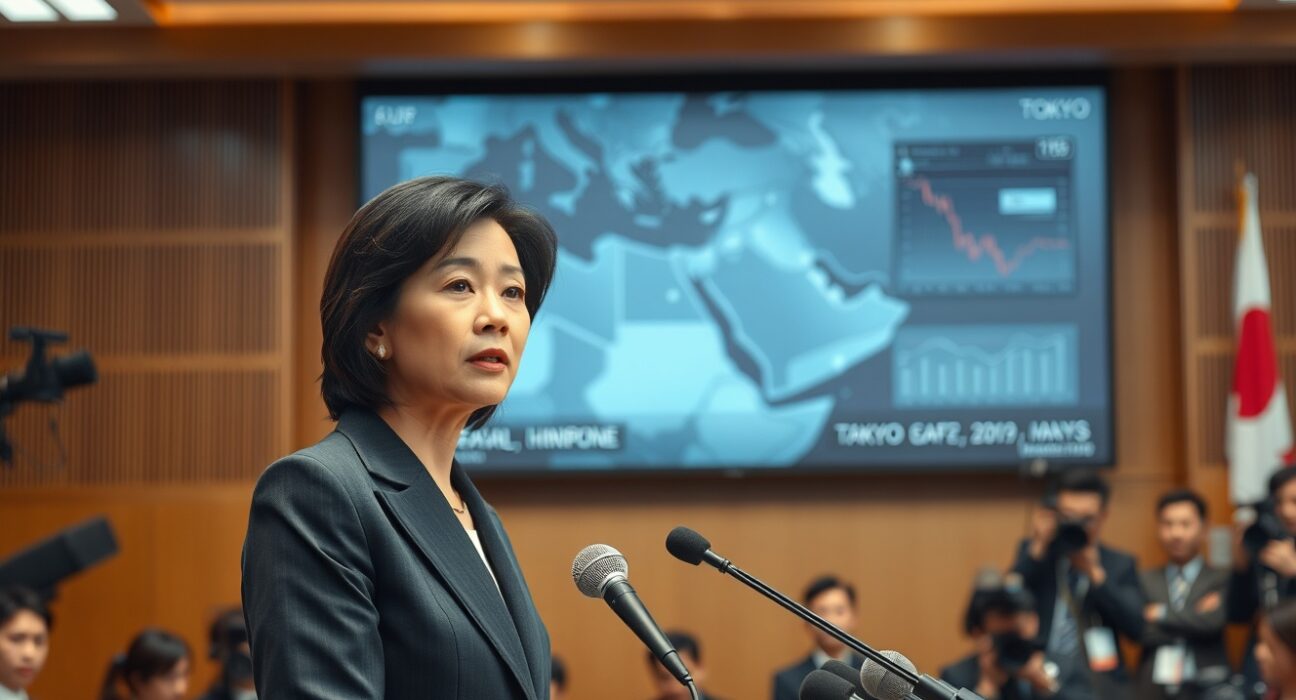
Japan’s Minister of State for Economic and Fiscal Policy, Sanae Takaichi, has indicated that the government is considering an extra budget primarily aimed at responding to the ongoing Middle East situation. The statement, made during a recent press briefing, underscores Tokyo’s growing concern over the economic and energy security implications of the regional instability.
Background and Context
The Middle East remains a critical region for Japan, which relies heavily on imports for its energy needs. Escalating tensions, including disruptions in shipping lanes and potential supply chain bottlenecks, have prompted Japanese policymakers to evaluate fiscal measures. Takaichi’s remarks suggest that the extra budget, if approved, would prioritize mitigating risks to energy imports and stabilizing domestic markets.
Fiscal Strategy and Market Implications
Japan’s government has historically used supplementary budgets to address unforeseen economic shocks. The potential allocation for Middle East-related responses could include subsidies for energy-intensive industries, strategic petroleum reserve enhancements, and support for shipping companies facing higher insurance and operational costs. Analysts note that such a move would also signal Japan’s commitment to proactive fiscal management amid global uncertainty.
Impact on Japanese Households and Businesses
For Japanese consumers, the primary concern is rising energy costs. An extra budget could include temporary relief measures, such as fuel price caps or direct subsidies, to cushion the impact on household budgets. Businesses, particularly in manufacturing and logistics, would benefit from measures aimed at stabilizing supply chains and reducing operational volatility.
Geopolitical and Diplomatic Dimensions
The decision also carries diplomatic weight. By earmarking funds specifically for the Middle East situation, Japan reinforces its role as a responsible stakeholder in global energy security. It also aligns with Tokyo’s broader strategy of strengthening ties with Gulf states while maintaining a neutral stance on regional conflicts. The extra budget could include provisions for humanitarian aid or diplomatic missions, further signaling Japan’s balanced approach.
Conclusion
Minister Takaichi’s indication of a possible extra budget reflects Japan’s pragmatic response to a volatile geopolitical environment. While the specifics remain under discussion, the move highlights the intersection of fiscal policy, energy security, and international relations. As the situation evolves, the Japanese government’s actions will be closely watched by markets and allies alike.
FAQs
Q1: Why is Japan considering an extra budget for the Middle East situation?
Japan is heavily dependent on Middle Eastern oil and gas. Regional instability threatens energy supply chains and could drive up domestic energy prices, prompting the government to prepare fiscal measures to mitigate economic risks.
Q2: What specific measures might be included in the extra budget?
Potential measures include subsidies for energy-intensive industries, support for shipping companies, strategic petroleum reserve enhancements, and temporary fuel price caps for consumers.
Q3: How would this extra budget affect the average Japanese citizen?
If approved, the budget could include relief measures such as fuel subsidies or direct payments to households, helping to offset rising energy costs and stabilize household finances.
Disclaimer: The information provided is not trading advice, Bitcoinworld.co.in holds no liability for any investments made based on the information provided on this page. We strongly recommend independent research and/or consultation with a qualified professional before making any investment decisions.
