

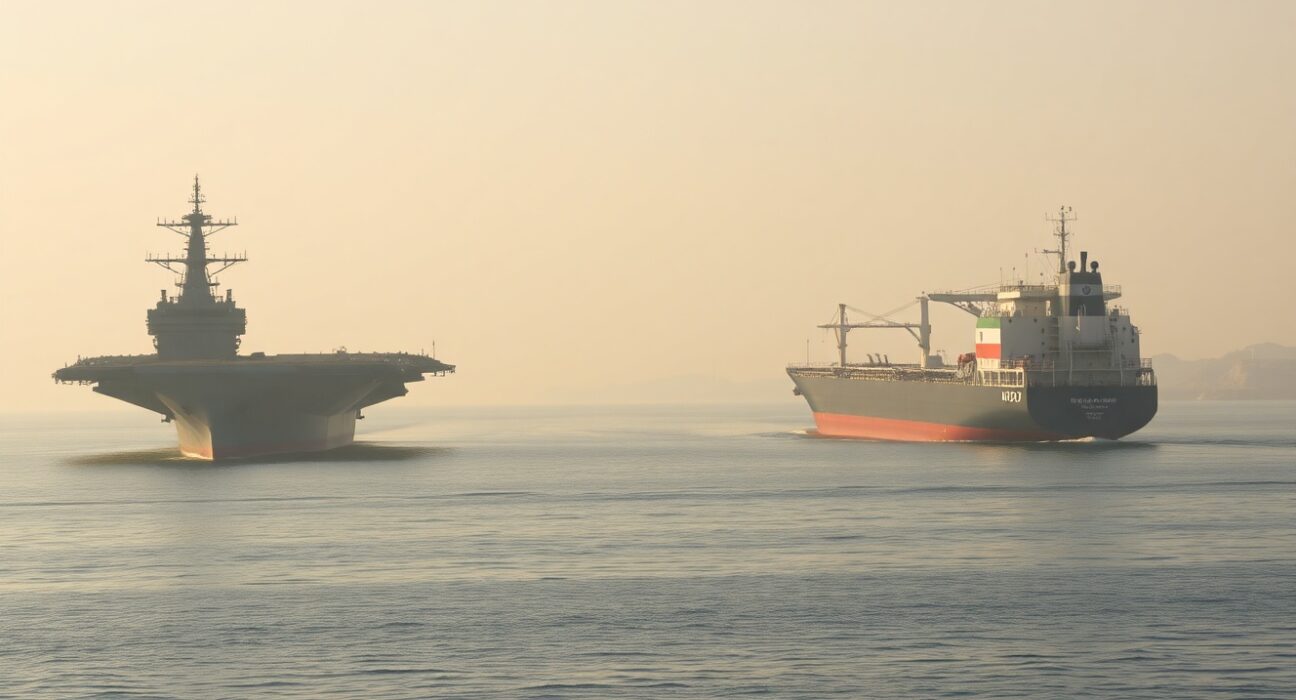
The United States may decide on resuming military operations against Iran within days, according to a report from Israeli media outlet Channel 12 on May 1. This development comes as Israel intensifies its own preparations for a potential renewed conflict with Tehran. The report cites a senior Israeli government official who claims that US-Iran negotiations could break down as early as next week, prompting a swift American response.
US Iran Military Action: What the Israeli Media Report Reveals
The Channel 12 report states that Israeli officials are on full alert. They monitor the possibility of diplomatic talks collapsing. The report adds that the United States is increasing pressure on Iran over issues related to the Strait of Hormuz. Washington may conduct military strikes against Iran’s energy facilities and government infrastructure.
This information aligns with broader regional concerns. The Strait of Hormuz is a critical chokepoint for global oil shipments. Any disruption there could spike energy prices worldwide. The US has historically viewed Iranian threats to this waterway as a red line.
Background: Rising Tensions in the Strait of Hormuz
Tensions in the Strait of Hormuz have escalated over the past year. Iran has conducted several naval exercises near the strait. It has also seized commercial vessels in what the US Navy calls ‘provocative actions.’ In response, the US has deployed additional naval assets to the region.
- Iran’s position: Tehran argues its actions are defensive, aimed at protecting its sovereignty.
- US position: Washington views these moves as threats to international navigation and global energy security.
- Israeli perspective: Israel sees Iran’s regional ambitions as an existential threat and pushes for stronger US action.
Potential US Military Strikes: Targets and Strategy
If the US decides on military action, the report suggests specific targets. These include Iran’s energy facilities and government infrastructure. Energy facilities could involve oil refineries, export terminals, and pipelines. Government infrastructure might include military command centers and intelligence buildings.
Analysts point out that such strikes would aim to degrade Iran’s ability to project power. They would not necessarily seek regime change. The goal would be to force Tehran back to negotiations with a weakened hand.
Expert Analysis: What Would Military Action Achieve?
Defense experts offer mixed views on the effectiveness of strikes. Some argue that limited strikes could deter Iran from further aggression. Others warn that any attack could trigger a broader regional war. Iran might retaliate by targeting US allies, including Israel and Saudi Arabia.
A former US intelligence officer notes: ‘The US has a playbook for these situations. It involves calibrated strikes that send a clear message without escalating into full-scale war. But the risk of miscalculation is high.’
Timeline: Key Events Leading to the Current Crisis
Understanding the timeline helps contextualize the report.
| Date | Event |
|---|---|
| January 2025 | Iran seizes a tanker near the Strait of Hormuz. |
| February 2025 | US deploys an aircraft carrier strike group to the region. |
| March 2025 | Indirect US-Iran talks begin in Oman, but stall over uranium enrichment. |
| April 2025 | Israel conducts airstrikes on Iranian-linked targets in Syria. |
| May 1, 2025 | Israeli media reports imminent US decision on military action. |
Impact on Global Markets and Energy Security
The prospect of US Iran military action has already affected oil markets. Crude prices rose by 3% following the Channel 12 report. Traders fear a disruption in supply through the Strait of Hormuz. About 20% of the world’s oil passes through this waterway.
Energy analysts predict that any actual conflict could push prices above $100 per barrel. This would strain economies already dealing with inflation. The US has strategic petroleum reserves, but they offer only temporary relief.
Regional Reactions: Allies and Adversaries
Regional powers are watching closely. Saudi Arabia and the UAE have called for de-escalation. They fear being drawn into a conflict. Russia and China, both close to Iran, have urged restraint. They criticize US ‘unilateralism’ in the region.
Israel, meanwhile, publicly supports US action. Israeli Prime Minister Benjamin Netanyahu has long argued that diplomacy with Iran fails. He believes only military pressure can stop Iran’s nuclear program and regional expansion.
US Iran Negotiations: Why They Are Failing
The Channel 12 report suggests negotiations could break down next week. Key sticking points include:
- Uranium enrichment: Iran refuses to cap enrichment at 3.67%, as demanded by the 2015 nuclear deal.
- Sanctions relief: Iran demands full removal of all sanctions, including those imposed by the Trump administration.
- Missile program: The US wants Iran to limit its ballistic missile development. Iran calls this non-negotiable.
- Proxy forces: The US demands Iran stop arming groups like Hezbollah and the Houthis. Iran denies these activities.
Diplomats involved in the talks describe the atmosphere as ‘pessimistic.’ Both sides appear unwilling to compromise. The window for a peaceful resolution is narrowing.
Conclusion
The US decision on military action against Iran appears imminent, as reported by Israeli media. This development carries significant implications for global energy markets, regional stability, and international security. The potential for strikes on Iran’s energy facilities and government infrastructure marks a serious escalation. While diplomatic efforts continue, the window for a peaceful resolution narrows. The world now watches Washington and Tehran closely, hoping for restraint but preparing for conflict.
FAQs
Q1: What did the Israeli media report say about US Iran military action?
The report from Channel 12 states that the US may decide on military strikes against Iran within days. It cites a senior Israeli official who warns that US-Iran negotiations could collapse next week. The US may target Iran’s energy facilities and government infrastructure.
Q2: Why is the Strait of Hormuz important in this context?
The Strait of Hormuz is a narrow waterway through which about 20% of the world’s oil passes. Iran has threatened to disrupt shipping there. Any US military action would likely aim to secure this chokepoint and prevent Iranian interference.
Q3: How would US strikes affect global oil prices?
Analysts predict that any conflict could push oil prices above $100 per barrel. Even the threat of strikes has already caused a 3% price increase. A prolonged disruption would strain global economies already facing inflation.
Q4: What are the main sticking points in US-Iran negotiations?
Key issues include Iran’s uranium enrichment levels, sanctions relief, its ballistic missile program, and its support for proxy forces. Both sides have shown little willingness to compromise, increasing the likelihood of a breakdown.
Q5: How is Israel preparing for a potential conflict with Iran?
Israel has placed its military on full alert. It has conducted airstrikes on Iranian-linked targets in Syria. Israeli officials are coordinating closely with US counterparts. They view Iran as an existential threat and support strong US action.
Disclaimer: The information provided is not trading advice, Bitcoinworld.co.in holds no liability for any investments made based on the information provided on this page. We strongly recommend independent research and/or consultation with a qualified professional before making any investment decisions.
